
The Yoga Sutras of Patanjali
25-hour Online Immersion
10 Weeks | January 12 — March 18, 2027
Live + Recorded (1 year of replay access)
Tuesdays: 90-min Lecture
Thursdays: 60-min Sādhana
All sessions take place @ 12pm New York Time.
Live on Zoom (January 12 — March 18, 2027) and recorded for replay with 1 year of continuous access. Live attendance is encouraged but not necessary. Students can submit questions during live lectures or afterward, using a form.
Tuesday lectures will break down all 195 sūtras one-by-one (~20 sūtras per lecture). We’ll translate key Sanskrit terms, explore the overarching themes, and interpret the teachings from a traditional yet modern lens.
Thursday Sādhanas will be a blend of Āsana (posture), Prānāyāma (breath), and Dhyāna (meditation). They will correspond with each lecture, allowing students to put the philosophical teachings into practice.
25 CEUs for registered yoga teachers.
Curriculum:
-
History and timeline of the classical yoga texts.
The purpose of studying the Yoga Sūtras.
Introduction to Sānkhya: Purusha (consciousness), Prakriti (nature), the Gunas (qualities), and the Citta (mind-field).
Biography and mythological story of Patañjali.
The importance of the Bhāshya, the original commentary written by Vyāsa.
-
Yoga Sūtras 1.1 — 1.22.
The definition and purpose of Yoga.
The five types of Vrittis (mental fluctuations).
The importance of Abhyāsa (practice) and Vairāgya (non-attachment).
The two main types of Samādhi: Samprajñāta (with cognition) and Asamprajñāta (without cognition).
-
Yoga Sūtras 1.23 — 1.40.
Īśvara (the divine) and the sacred cosmic syllable OM.
The Antarāyas (mental obstacles), and how to overcome them using meditation.
The Brahmavihāras (divine attitudes): Maitrī (friendliness), Karunā (compassion), Muditā (sympathetic joy) and Upekshā (equanimity).
-
Yoga Sūtras 1.41 — 2.11.
Deeper into Samādhi and Samāpatti, the various states of meditative absorption.
Kriyā Yoga (yoga in action), consisting of: Tapas (austerity), Svādhyāya (self-study), and Īśvara-pranidhāna (surrender to the divine).
The Five Kleśas (mental afflictions): Avidyā (ignorance), Asmitā (egoism), Rāga (attachment), Dvesha (aversion), and Abhiniveśa (clinging to life).
-
Yoga Sūtras 2.12 — 2.28.
Karma and its relationship to the Kleśas.
A further exploration of Avidyā (ignorance), the primary source of suffering.
The relationship between the Drashtā (Seer) and Drśya (Seen).
Viveka-khyāti (disctriminative discernment) as the key to liberation.
-
Yoga Sūtras 2.29 — 2.45.
Overview of Ashtānga Yoga (the eight limbs of Yoga): Yama, Niyama, Āsana, Prānāyāma, Pratyāhāra, Dhāranā Dhyāna, Samādhi.
Pratipaksha-bhāvanā: cultivating the opposite attitude when disturbed by negative mental patterns.
The Yamas (ethical restraints): Ahimsā (non-harming), Satya (truthfulness), Asteya (non-stealing), Brahmacharya (energy moderation), and Aparigraha (non-possessiveness).
The Niyamas (ethical observances): Śauca (purity), Santosha (contentment), Tapas (austerity), Svādhyāya (self-study), Īśvara-pranidhāna (surrender to the divine).
-
Yoga Sūtras 2.46 — 3.15.
Defining Āsana (posture) in the context of the Yoga Sūtras.
Prānāyāma (breath regulation) and Pratyāhāra (withdrawal of the senses) as preparation for meditation.
The three Antarāngas (inner limbs): Dhāranā (concentration), Dhyāna (meditation), Samādhi (absorption), and the integration of all three together.
-
Yoga Sūtras 3.16 — 3.37.
Samyama: the integration of the inner limbs of Dhāranā, Dhyāna, and Samādhi.
The Siddhis: the mystic powers attained through Samyama on various objects. Examples include knowledge of the past and future, understanding the minds of others, awareness of death and karma, extraordinary strength, intuitive wisdom, subtle sense perception, and ultimate discernment.
-
Yoga Sūtras 3.38 — 4.11.
Siddhis (mystic powers) can become obstacles when one is bound to them; thus the Yogi must cultivate the highest non-attachment.
Further teachings on Karma (actions and their results), Samskāras (latent impressions) and Viveka (discernment).
-
Yoga Sūtras 4.12 — 4.34.
A culminating discussion on Kaivalya (liberation): total independence of Purusha (The Seer) from Prakriti (The Seen).
The relationship between objects, the mind, and consciousness.
Transformation occurs when the Gunas (qualities of nature) have fulfilled their purpose and return to their source.
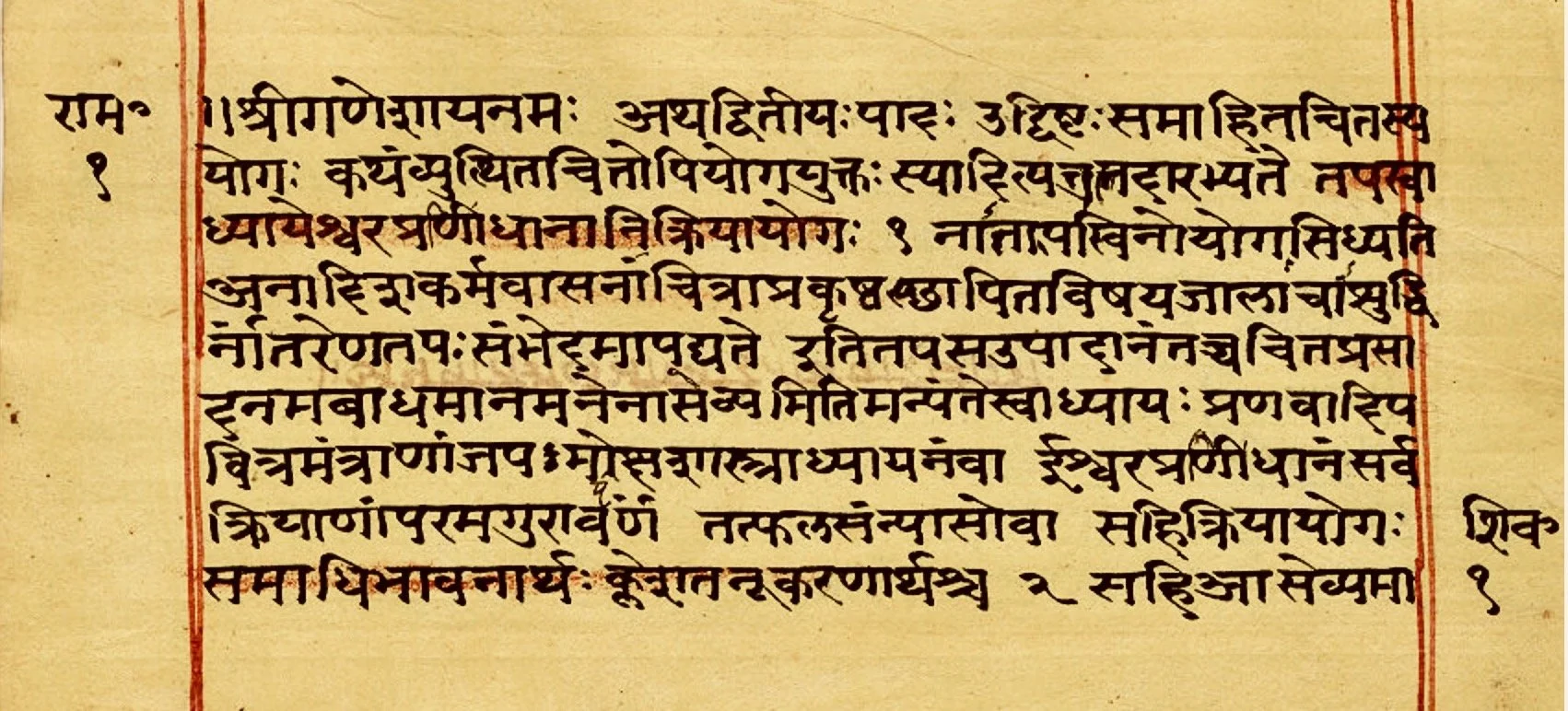
This course will explore all four Pādas (chapters) of Patañjali’s Yoga Sūtras:
Samādhi Pāda: Chapter on Absorption
Sādhana Pāda: Chapter on Practice
Vibhūti Pāda: Chapter on Mystic Powers
Kaivalya Pāda: Chapter on Liberation
The Yoga Sūtras are a concise text that offers expansive teachings on the nature of the mind, the causes of suffering, and the practices that lead to liberation. Each sūtra is a short aphorism, a thread of spiritual wisdom that invites philosophical weaving and commentary. This immersion offers a strong foundation for a lifetime of study.
Tuition: $444 usd